Ecommerce SEO that compounds
into non-brand revenue.
1Dot Digital provides ecommerce SEO for online stores: technical fixes, category and product page optimization, and content for commercial searches, planned from one keyword-to-page map and reported as revenue.
We start with a crawl and Search Console review to find where your store loses visibility, such as faceted URLs, thin category pages and duplicate product variants, and fix those first.
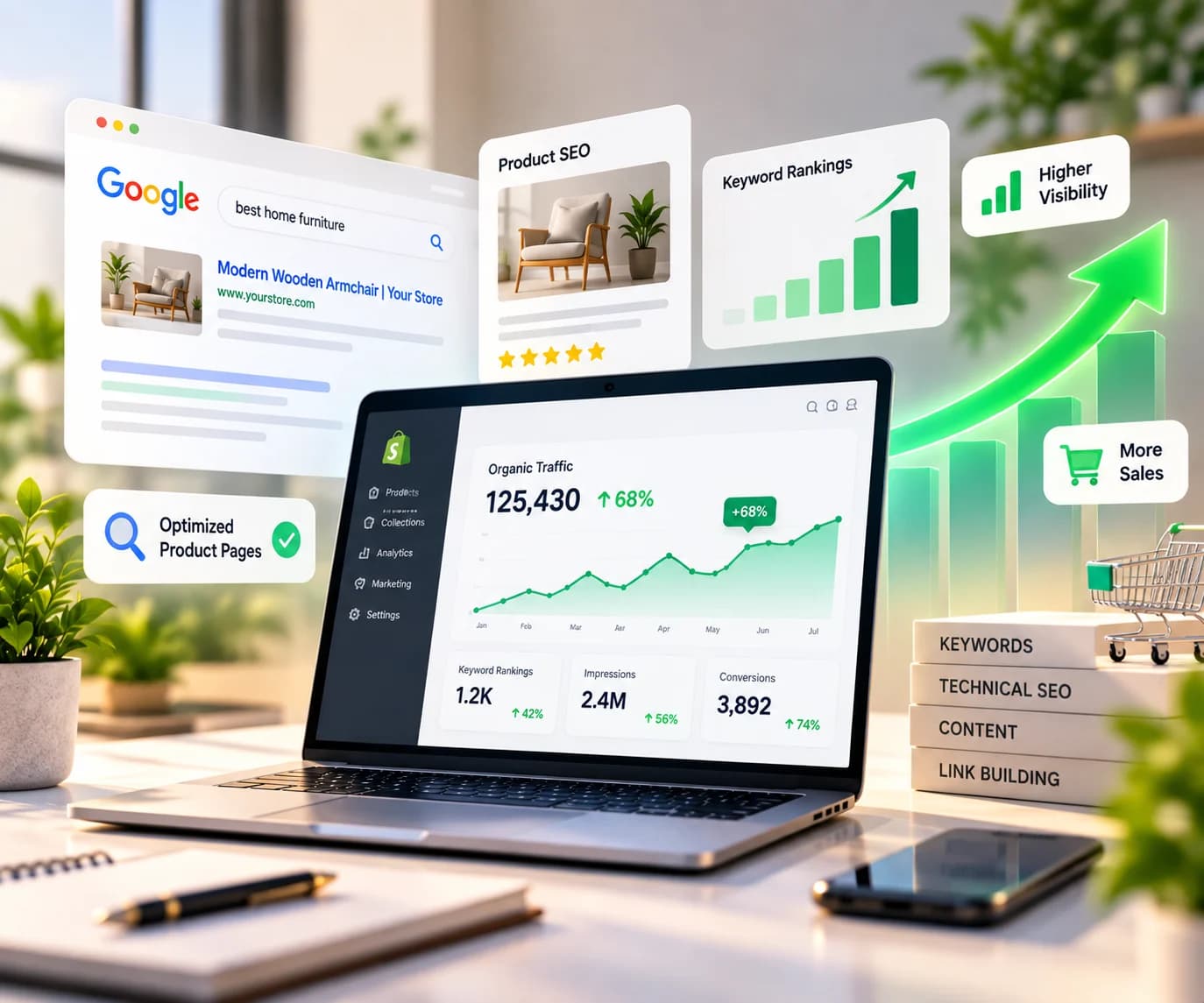
- Organic revenue
- ▲ 42%
- Non-brand sessions
- +68%
- Paid ROAS
- 4.7x
Channels
What ecommerce SEO includes
Technical ecommerce SEO
FoundationCrawl and index control for stores with thousands of URLs: faceted navigation, canonicals, pagination, URL parameters, sitemaps and structured data.
- Crawl and indexation audit
- Faceted navigation and canonical rules
- Product and breadcrumb structured data
Category & collection pages
Revenue pagesCategory pages target the broad commercial searches shoppers start with. We map keywords to each one and rework titles, headings, intro copy, filters and internal links.
- Keyword-to-page map
- Category copy and on-page fixes
- Internal links from navigation and products
Product page SEO
ScaleProduct templates that give search engines and shoppers unique, complete information at catalog scale: titles, descriptions, variants, reviews, availability and schema.
- Template-level title and description rules
- Variant and out-of-stock handling
- Product schema and feed alignment
Content & authority
AuthorityBuying guides, comparisons and educational content that answer pre-purchase questions and link back to the category pages that sell.
- Content plan by commercial intent
- Briefs and drafts
- Internal linking to category pages
Replatforming & Redesign
SEO for platform migrations and redesigns
Replatforming and redesigns are when stores lose the most organic traffic. We inventory every URL that earns clicks or links, map 301 redirects before launch, carry titles, metadata and structured data across, and monitor Search Console after cutover. We can't promise rankings will hold, but we can make sure nothing is lost by accident. See our store migration service.
Cadence
How ongoing SEO runs
Week 1 — Plan
Priorities set against last month's organic revenue and Search Console data.
Week 2–3 — Execute
Technical fixes, on-page changes and content shipped.
Week 4 — Measure
Report built from Search Console and GA4 data; next month's plan drafted.
Quarterly
Strategy review against revenue targets.
Reporting
What you'll see every month
| Metric | Definition | Source |
|---|---|---|
| Non-brand organic revenue | Revenue from organic sessions excluding brand queries. | GA4 + Search Console |
| Category visibility | Ranking pages and impressions for target category clusters. | Search Console |
| Indexation health | Valid vs. excluded pages and crawl errors for key templates. | Search Console |
| Organic conversion rate | Orders per organic session by landing-page type. | GA4 |
Results
Published with a definition and a window
We report results with the metric, period and source named. No vanity multipliers and no guaranteed rankings.
See ecommerce SEO case studiesFAQ
Growth questions
Should we start with SEO or paid ads?
Usually both, weighted by margin and time horizon. Paid can produce orders quickly; SEO builds compounding organic revenue over months. Our ecommerce digital marketing service covers the paid side.
Do you write category and buying-guide content?
Yes. Category copy and buying guides are mapped to commercial search intent and written to help shoppers choose, then linked to the category pages that sell.
Is there a minimum contract term?
Terms are stated in your proposal. VERIFY BEFORE PUBLISHING: replace with the real policy if one exists.
What makes ecommerce SEO different?
Stores have thousands of URLs, filters that create duplicates and category pages that carry the revenue, so crawl control and category structure matter more than blog traffic.
How do you handle faceted navigation?
We decide which filter combinations deserve their own indexable pages, then control the rest with canonicals, noindex rules or crawl directives, tested on a sample before rollout.
How long does ecommerce SEO take to work?
It depends on the site's starting point and competition. Technical fixes can show up in Search Console within weeks; category and content gains usually take months. We don't guarantee rankings or revenue.
Does the platform matter for SEO?
Yes. Shopify, BigCommerce and WooCommerce each limit URL structure, templates and crawl control differently, so the fixes differ by platform.
Will you protect our rankings during a migration?
We reduce the risk with URL inventory, redirect mapping and post-launch monitoring. We can't guarantee rankings.
Want an SEO plan built on your Search Console data?
Share GA4 and Search Console access and we'll return a 90-day plan with priorities and target metrics.