FRPros BigCommerce Stencil Development Case Study
Overview
Custom Stencil design for company FR programs
FRPros presents a managed flame-resistant clothing program for employers. The public website connects a service explanation with consultation calls, company-account access and a separate retail destination. The supplied project scope is BigCommerce Stencil Custom Development.
This case study reviews the public-facing experience on 7 October 2026. It focuses on the custom presentation, page hierarchy and paths into enquiry and account access. Screenshots are original captures of frpros.com; internal company stores and account administration were not accessed.
Challenge
Explain a managed service before asking for commitment
The design challenge is to help an employer understand a program rather than simply choose a garment. A prospective customer needs a clear service proposition, a sense of the onboarding process and an obvious route to a conversation.
The public interface also serves existing customers. Company-account access must remain easy to find while the main page introduces the service to new visitors. A separate retail-site link creates a third route for individual product browsing.
These competing intentions call for a deliberate hierarchy: establish the program first, explain the next steps, present evidence and answer practical questions before repeating the consultation action.
Approach
Give each audience a clear next step
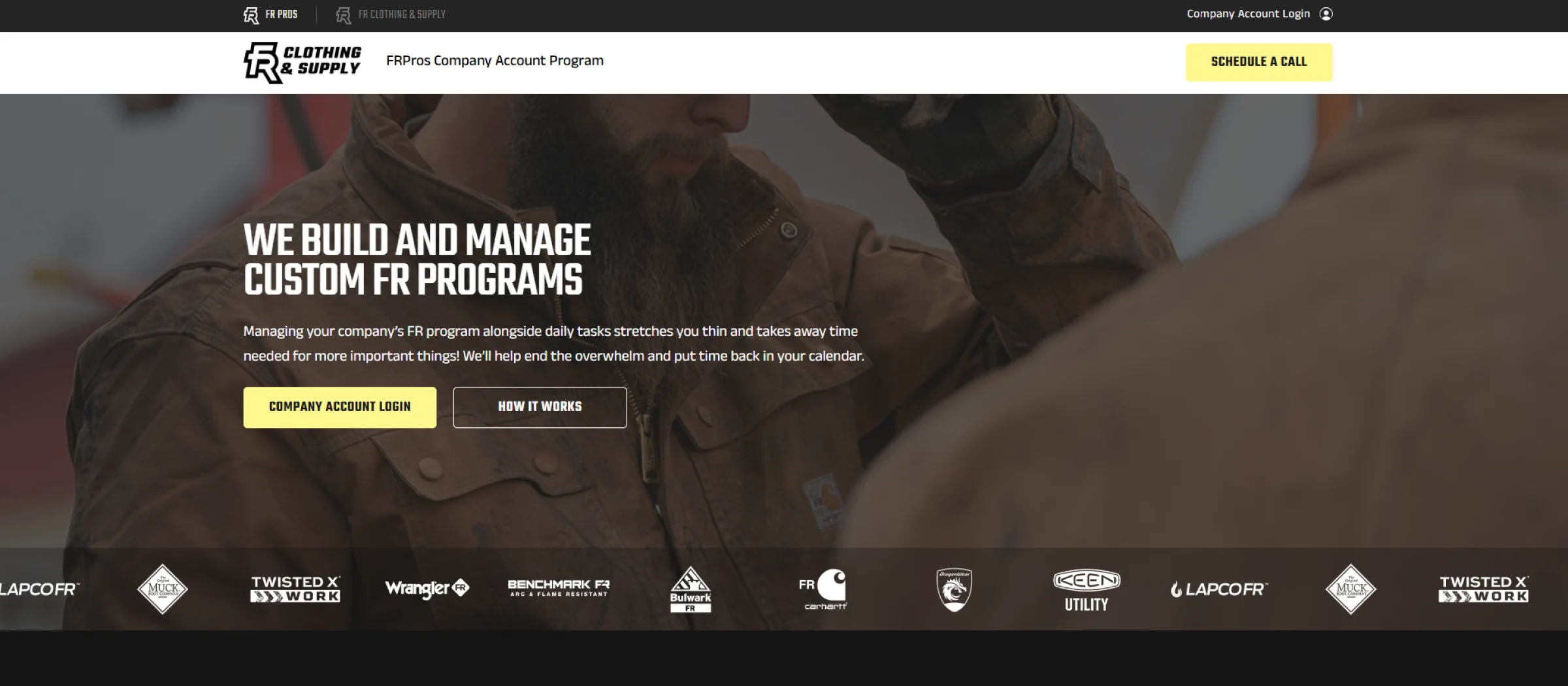
The header separates FRPros from the related FR Clothing & Supply destination and keeps company login visible. A prominent scheduling action serves the prospect journey, while the hero offers login and process-navigation routes.
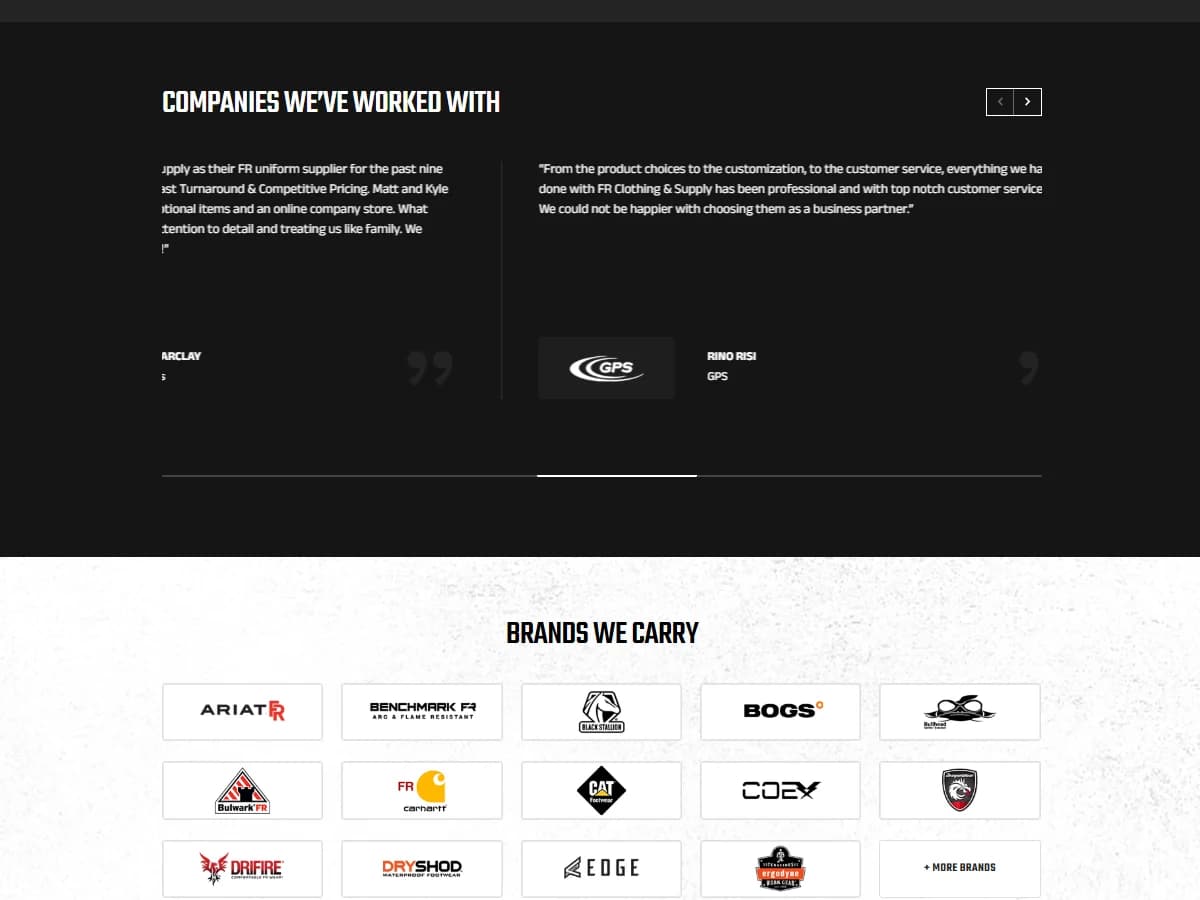
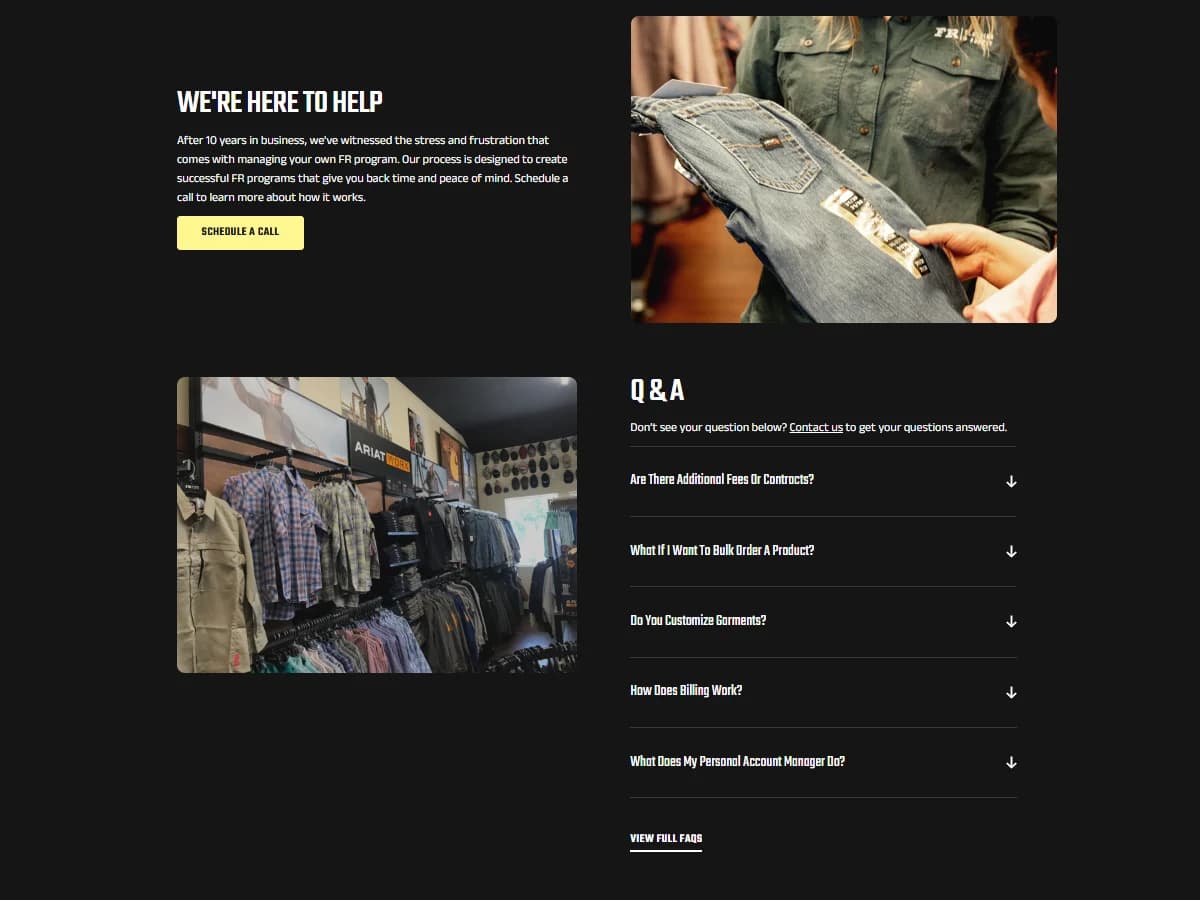
The page then progresses through benefits, onboarding, workwear imagery, testimonials, brand logos, questions and educational material. The observed sequence provides several ways to understand the offer without forcing every visitor through a product catalog.
For the case-study narrative, the design is assessed through this audience structure. Delivery ownership, implementation dates and the exact set of custom code changes require project records; they cannot be inferred from the interface alone.
Design
Industrial imagery with unmistakable actions
The homepage uses a dark background, bold condensed uppercase headings and bright yellow actions. Workwear photography establishes the industrial context; white text and substantial visual blocks create a strong hierarchy.
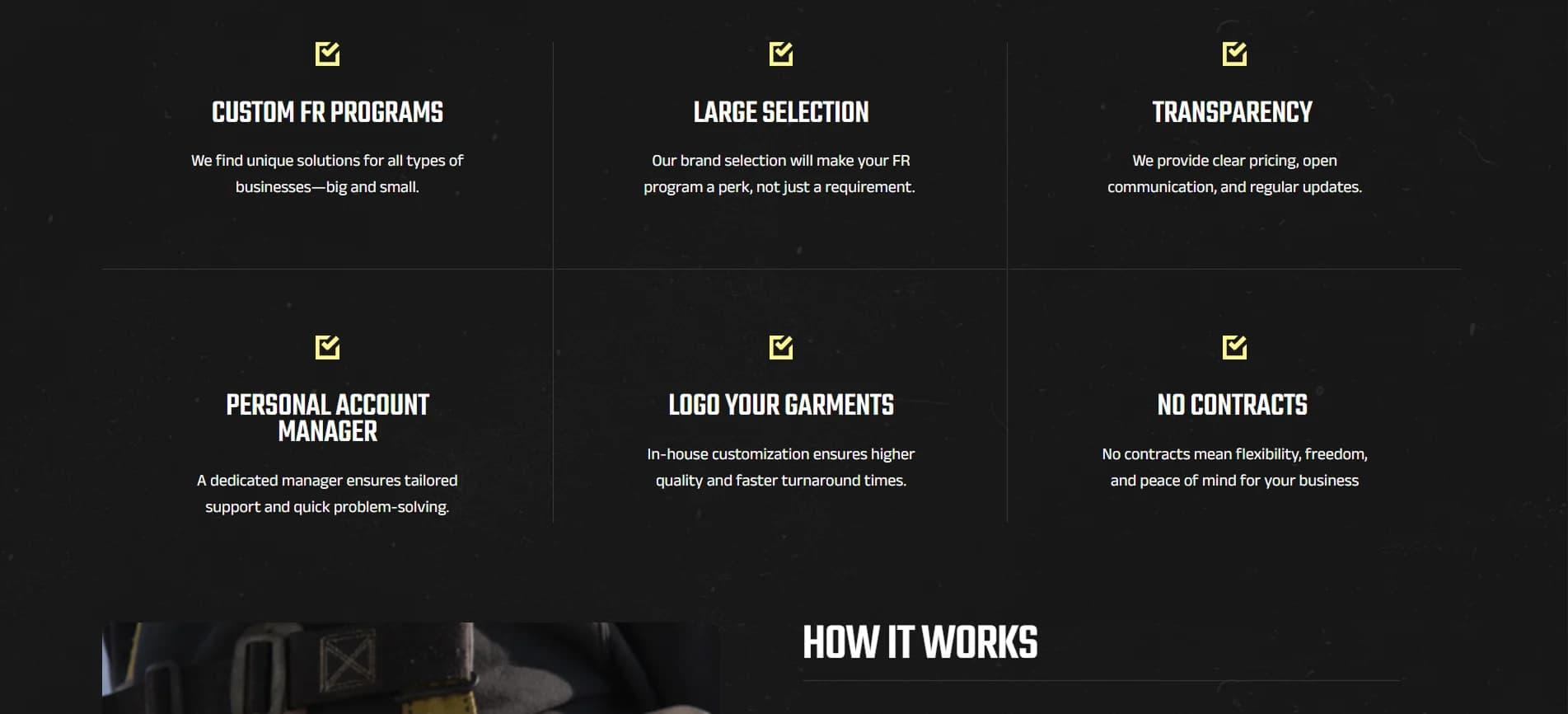
The hero combines a full-width photograph, short supporting copy and two differentiated actions. A moving brand strip supplies a visual credibility layer beneath the opening message. Benefit blocks use repeated icon and heading treatments.
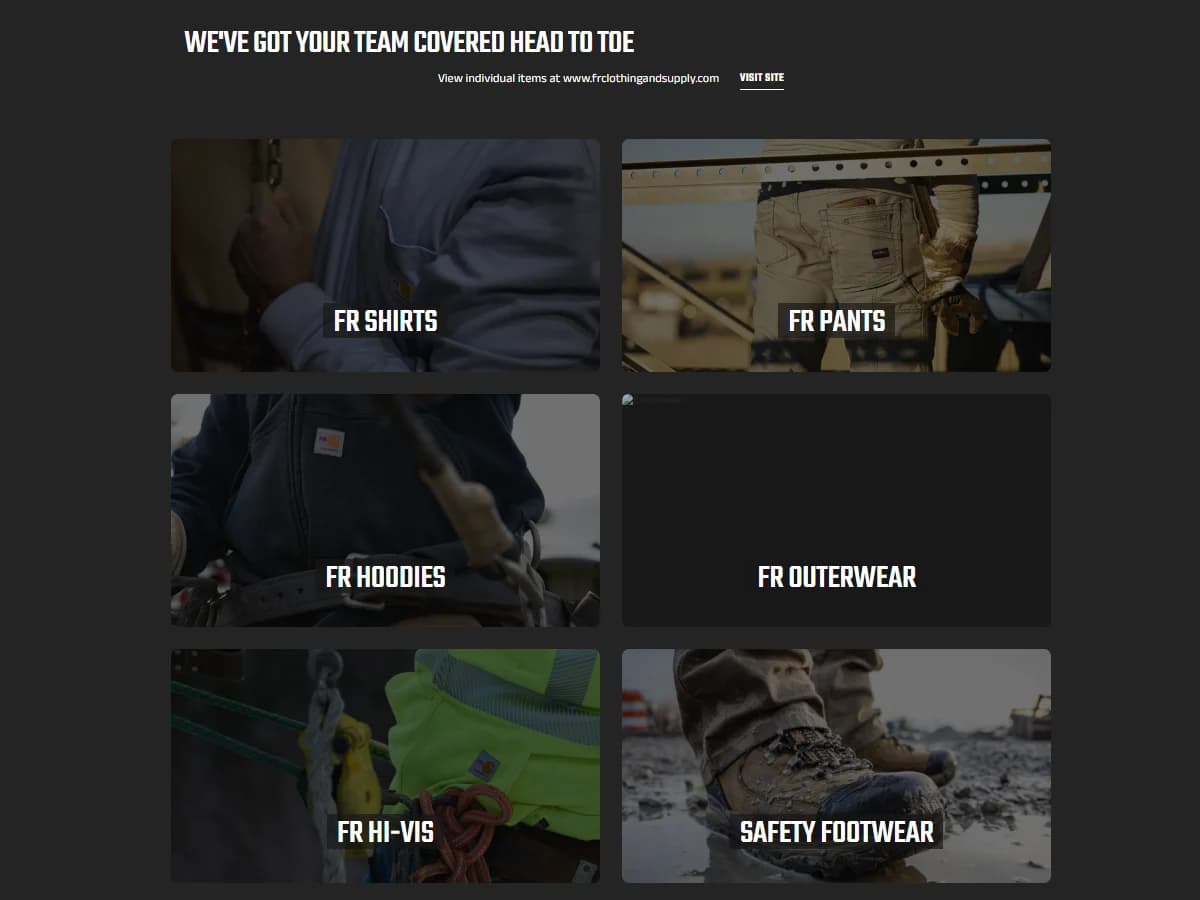
The process section pairs a large photograph with four numbered rows. Workwear categories use large photographic tiles with centered labels. These sections preserve the same dark visual language while changing the layout rhythm.
The case-study presentation uses the supplied agency reference: a clean header, editorial title, metadata cards, wide hero, section index and framed screenshots. Yellow and charcoal accents connect the presentation to FRPros without altering the captured interface.
Stencil development
A custom presentation layer on BigCommerce
BigCommerce Stencil Custom Development is the scope supplied for this case study. The public page includes assets served from a mybigcommerce.com host and native-looking account paths; these are platform signals, not proof of specific theme source or agency authorship.
BigCommerce documents Stencil as a Handlebars-based theme system supporting Sass and SCSS. Its JavaScript documentation describes page-specific modules and mapping custom templates to modules. This provides the platform context for a bespoke presentation layer; it does not establish which implementation FRPros uses.
Recommended implementation boundaries are reusable hero, benefit, process, category, testimonial, FAQ and call-to-action components. Shared styles should govern spacing, headings and action states; interaction modules should handle disclosure controls and sliders with accessible semantics. These are architectural recommendations rather than verified repository findings.
The review did not inspect template files, SCSS, JavaScript bundles, theme settings, build scripts or deployment history. It therefore avoids claims about custom APIs, employee allowance logic, ERP connections, customer-group rules and company-store provisioning.
User journey
Consultation, account access and product exploration
A new employer can read the service introduction, use the How It Works action to reach the process section, then follow a scheduling link. The in-page process navigation was exercised during the review and moved the viewport to the numbered section.
An existing customer has a separate company-login route in the header and hero. A product-focused visitor can follow the visible link to FR Clothing & Supply. These journeys should be measured separately because their intentions and success conditions differ.
The reviewed schedule links lead to Calendly and contain different month parameters, including historic dates. Their current availability and appointment submission were not tested. Consolidating the destination is a recommended maintenance check, not evidence of a failed booking flow.
No login, enquiry form, newsletter subscription, appointment booking or order was submitted. The public interface is the evidence boundary for this report.
Program context
Public service claims and private workflows
The dedicated FAQ describes managed employee allotments, spending reports, company-specific product selections, garment customization, NET-account billing and shipping to multiple addresses. These are advertised service capabilities; the internal interfaces and automation behind them remain unverified.
That distinction matters for a Stencil case study. Theme development can shape how the program is explained and how a customer enters the journey, while operational rules may live in separate systems or manual processes.
To strengthen the eventual delivery story, add approved screenshots of company-store access, relevant theme changes and a scope record. Include sensitive account information only after removing employee details and other private data.
On-page SEO
Align the public page with its program intent
The observed browser title emphasizes workwear and safety gear, while the visible page focuses on company programs. Review the title and description against the preferred search audience so the snippet explains the service represented on the page.
The homepage has a company-program heading and section headings. Use a clear heading hierarchy, useful internal links to the process and FAQs, and descriptive alternatives for content-bearing images. Generic brand-image labels visible in the accessibility tree are candidates for review.
For the published case study, use FRPros BigCommerce Stencil development in the title, opening copy and development discussion. Supporting terms should explain the work naturally: custom theme design, company-program UX and consultation journeys.
Canonical tags, indexing, structured data, Core Web Vitals and ranking changes were not measured. Before publication, validate technical metadata and assess image, slider and embedded-video loading. These are recommended checks rather than confirmed defects or completed optimisation.
Result
What the public experience demonstrates
The reviewed page demonstrates a consistent brand presentation and distinct routes for consultation, existing accounts and retail exploration. The process-navigation action provides an observed interaction outcome. Original screenshots show the hero, process section and workwear tiles.
The site also presents customer testimonials. These support its public credibility strategy but are not independent evidence of this development project’s performance. No testimonial is treated as an agency result.
Revenue, lead growth, appointment completion, conversion uplift, performance improvement and delivery time were not supplied. A measured results section should compare approved periods and track consultation clicks, completed bookings, qualified enquiries and account-entry use.
Add the agreed delivery scope and launch date before publishing the case study as a definitive project success story. Until then, the narrative remains a grounded account of the visible design and supplied development focus.
Ready to build a better store?
Tell us about your business, current platform and goals. We'll recommend the right path and send a scoped quote.